
RecoveryLab.
What actually helps athletes recover, what doesn't, and when a client needs a doctor. Then how your business offers it.
Apply for a seatSAT 31 OCTFor people who train other people.
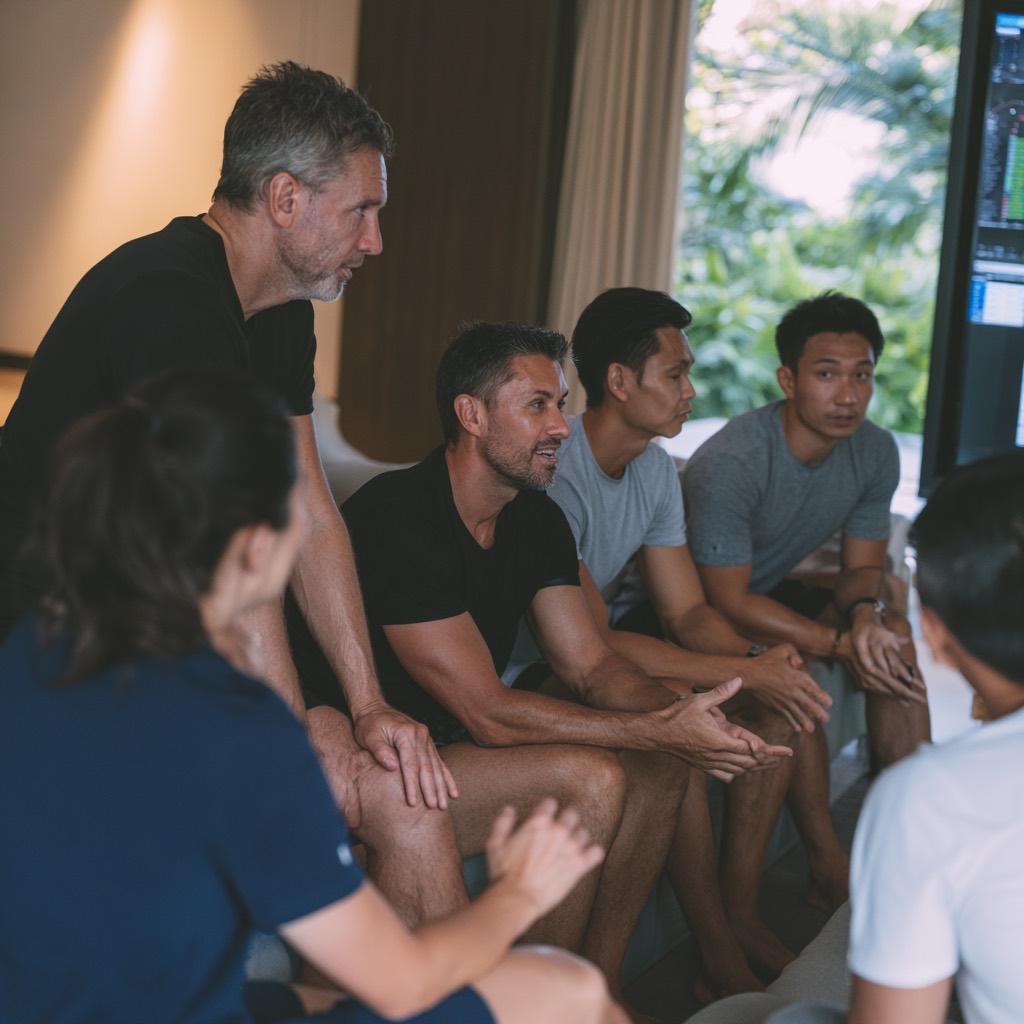
Your clients push hard. Some stop progressing, some get hurt, most try recovery tricks they found online. This room shows what actually helps, when a doctor should step in, and how to offer that next step as part of your service.
 Speaker
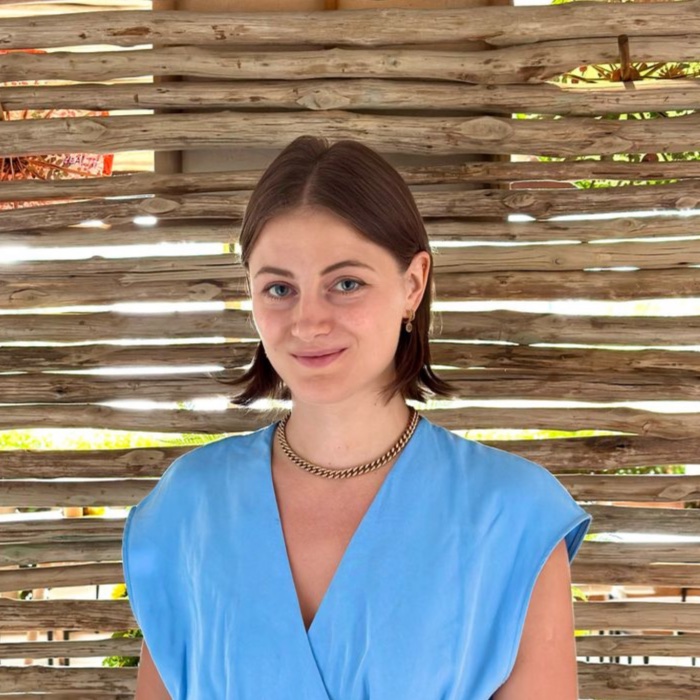
Dr. Polina Virchik
Integrative and Preventive Medicine, The LifeCo Phuket
Speaker
Dr. Polina Virchik
Integrative and Preventive Medicine, The LifeCo Phuket
More than eight years in hospital critical care, followed by integrative and anti-ageing practice. Graduate of Sechenov First Moscow State Medical University.
With Dmytro, The Protocol Room, on the business side: how a recovery service fits into what you already sell.
Two and a half hours. One protocol.
Arrival
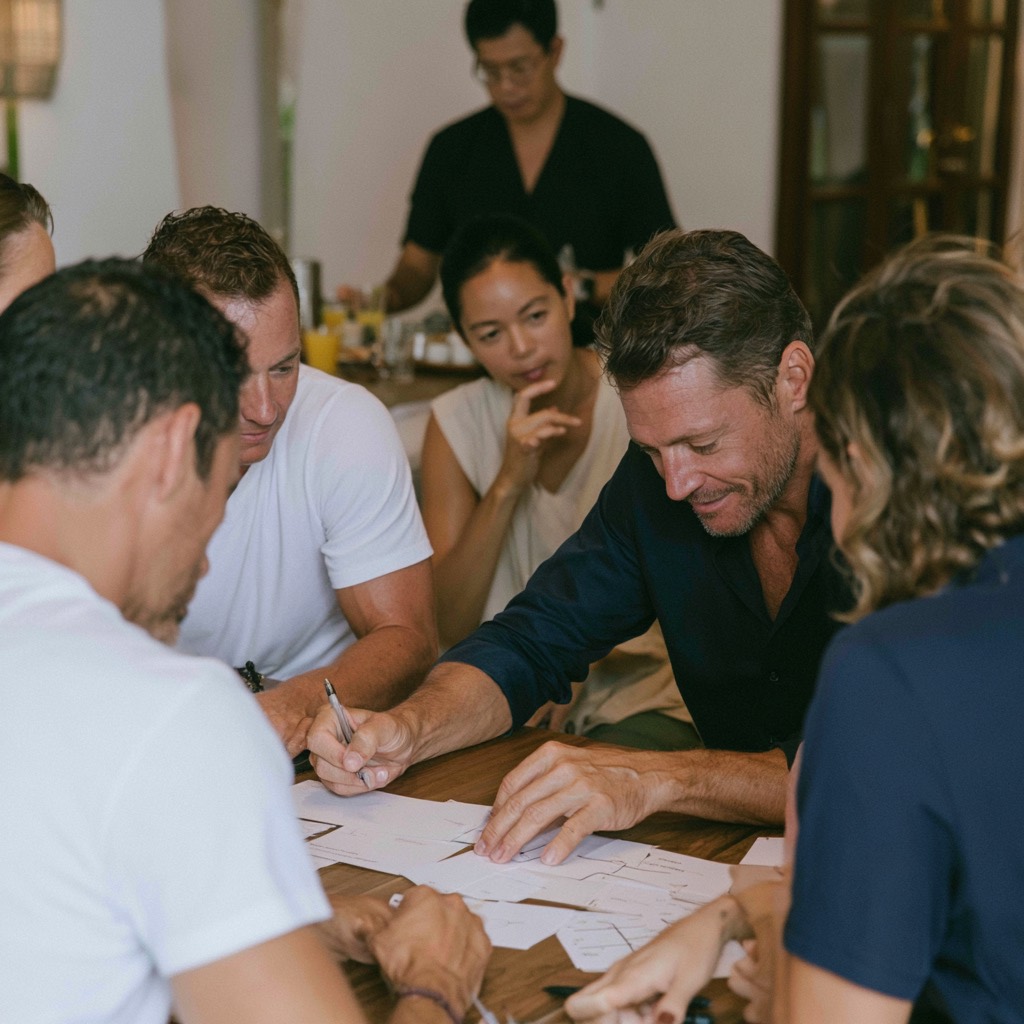
Coffee, name cards and a seat next to someone from a different kind of business.
How muscles work and recover
A live demo of static and dynamic work. Where the energy comes from, why soreness peaks 24 to 72 hours later, and why lactate is fuel, not a toxin.Dr. Polina Virchik
The recovery toolkit
Food, sleep, stretching, sauna, cold plunge, oxygen training and doctor-led IV options: what each one does, what the research says, when it needs a doctor.Dr. Polina Virchik
Break
Water, snacks and the recovery methods board.
Three client stories
Three fictional clients walked through the way a clinic would: what to rule out first, what is proportionate, what to promise and what not to. Questions after.Dr. Polina Virchik
Where your business comes in
Three ways to work with a partner clinic, from a front-desk card to your own recovery package.Dmytro, The Protocol Room
Walk away with
The 48-hour check card, the recovery methods sheet and a partner pathway for your business.
What helps, and what doesn't.
Six methods your clients already ask about. What each one does, what the research says, and when it needs a doctor.
- What it does
- Matches training to capacity and refills the tank: carbohydrate after long sessions, protein through the day, fluid, sodium and sleep.
- The evidence
- Everything else works on top of this. Nothing replaces it.
- Watch for
- Performance that keeps falling even on easier days.
- What it does
- Improves comfort and range of motion.
- The evidence
- Stretching has not shown a clinically important effect on muscle soreness.
- Watch for
- Pain that is focal, swollen or getting worse.
- What it does
- Relaxing, but adds heat strain and fluid loss.
- The evidence
- Studies on next-day performance are mixed.
- Watch for
- Skip it when dizzy, dehydrated or ill.
- What it does
- Can reduce soreness and perceived fatigue.
- The evidence
- Frequent plunges right after strength sessions may reduce long-term strength and muscle gains.
- Watch for
- Heart or cold-related risks: screen first.
- What it does
- Light exercise while breathing extra oxygen (EWOT).
- The evidence
- Limited and mixed evidence in healthy athletes.
- Watch for
- Unexplained breathlessness. That needs an assessment, not oxygen.
- What it does
- These molecules matter in the body's energy and antioxidant systems.
- The evidence
- IV use has not been shown to speed athletic recovery.
- Watch for
- Only after a consultation and a documented reason. Under anti-doping rules, infusions over 100 mL in 12 hours are generally prohibited.
Summarised from the session protocol prepared by the medical team of The LifeCo Phuket. Sources are shared in the room. Educational, not medical advice.
Which one is your client?
Fictional clients the doctor walks through in the session. The first questions she asks are the ones your team can learn to notice.
CrossFit five times a week. Work travel cut his sleep to six hours, but he keeps adding sessions. Workouts feel much harder and his focus is slipping. He asks for an NAD+ drip before a competition.
A keen cyclist. After a stressful month and fewer rides, an easy ride suddenly feels hard. She asks if oxygen training and NAD+ could reset her energy.
Weights six days a week. Skips breakfast, eats little after training, sleeps five or six hours. His usual weights feel heavy. He thinks he needs a recovery drip.
Fictional teaching scenarios, not patient testimonials or evidence of treatment results.
Where your business comes in.
Three ways to work with a partner clinic, from zero setup to your own recovery package. Bring one client in mind: who would you refer first?
The front-desk card and one booking line to the clinic. With the client's consent, the clinic shares a recovery plan your coaches can follow.
Bundle your own sessions, such as mobility, deload weeks and recovery days, with a clinic assessment. You sell your part, the clinic delivers the medical part.
The clinic team runs a recovery check day or a talk at your venue for your members.
Partnership terms are agreed individually with the partner clinic. The Protocol Room helps set them up.
What you take home.
Three working tools, built during the room on your own cases.
The 48-hour check in three columns, with the referral sentence on the back.
- For
- Reception, coaches
- Format
- A6 card
Six methods: what they do, what the evidence says and when a doctor is needed.
- For
- Coaches, owners
- Format
- One page
Refer, package or host: the model that fits your business and the next step to set it up.
- For
- Owners, managers
- Format
- One-page plan
Apply for a seat.
Ten seats. We keep the table to people who can put the protocol to work in their business.
- We read your applicationWithin two working days.
- A 15-minute callSo the case work in the room fits your business.
- Your seat is confirmedWith the venue and anything to prepare.